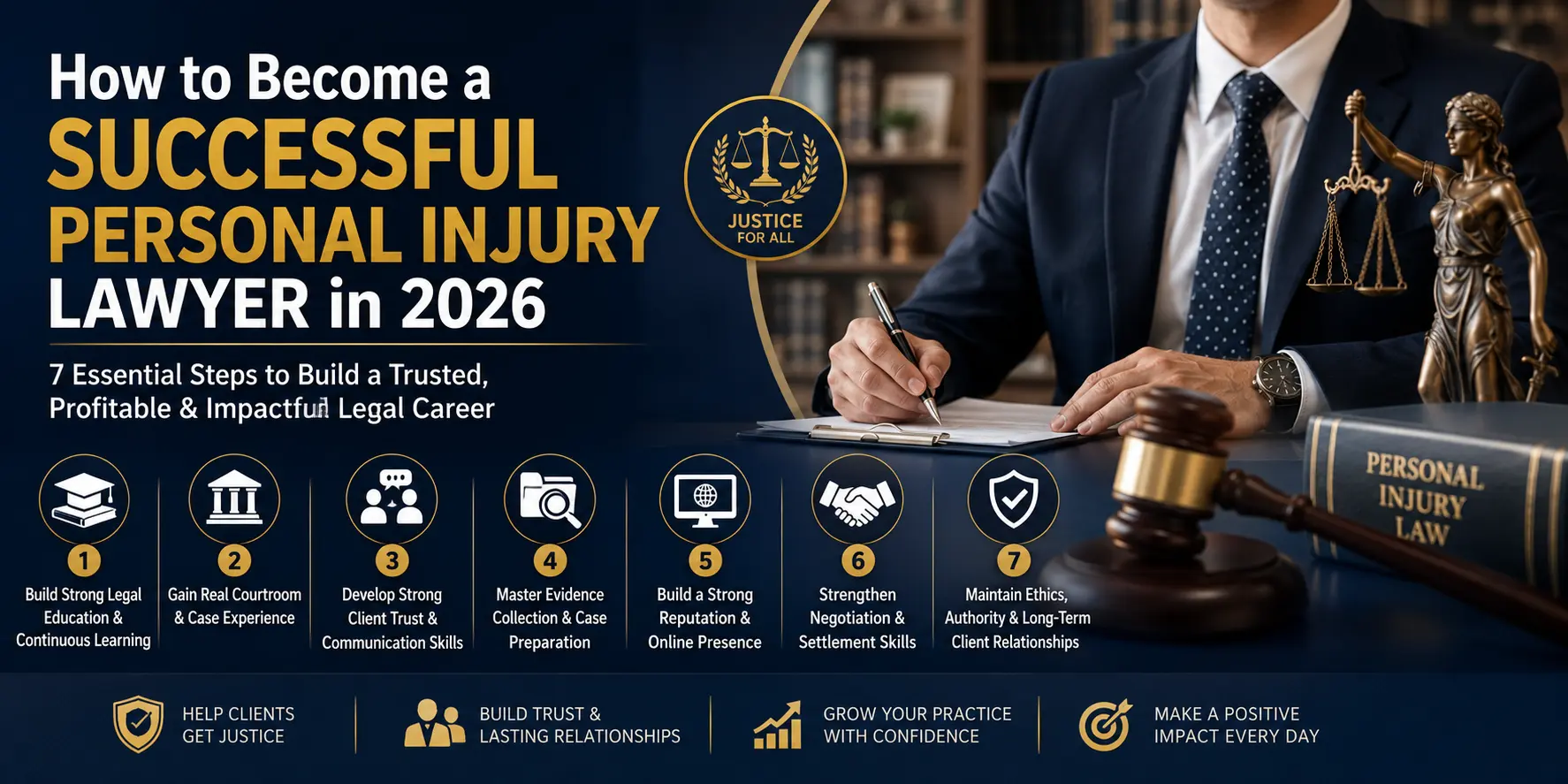
How to Become a Successful Personal Injury Lawyer in 2026
Becoming a successful personal injury lawyer in 2026 requires more than just a law degree; it demands a balanced combination of knowledge, skills, and professional integrity.
The legal field is becoming increasingly competitive, and clients now expect lawyers who are not only knowledgeable but also approachable, ethical, and result-oriented. A strong foundation in legal education, along with continuous learning, helps a lawyer stay updated with changing laws and court practices.
At the same time, practical courtroom experience, communication skills, and evidence handling play a major role in building a strong career. In today’s digital age, reputation and online presence also contribute significantly to success.
This guide highlights the essential steps that help aspiring lawyers grow into trusted professionals in personal injury law.
1. Build Strong Legal Education & Continuous Learning
To become a successful personal injury lawyer in 2026, strong legal education is the foundation of your career. You should complete your law degree with a clear focus on personal injury law so that you understand core principles of negligence, liability, and compensation.
A student also benefits when they study real court judgments because they show how legal rules are applied in practice. You must also keep updating your knowledge because laws and procedures often change over time. When a lawyer studies new precedents and case rulings, they stay relevant and confident in court.
Continuous learning helps you improve your legal reasoning skills and strengthens your ability to handle complex injury claims. A committed learner always grows into a more reliable and successful legal professional.
2. Gain Real Courtroom & Case Experience
To become a successful personal injury lawyer in 2026, gaining real courtroom and case experience is very important. A law student should start with internships in reputable law firms where they can observe real legal proceedings and case handling.
A junior associate should actively assist senior lawyers in preparing documents, reviewing evidence, and understanding courtroom strategies. Practical exposure helps a lawyer understand how real injury claims are argued and settled in practice.
A developing lawyer should also take responsibility for smaller cases to build confidence and decision-making skills. Courtroom observation improves understanding of judge behavior, legal arguments, and trial procedures.
Continuous hands-on experience helps a lawyer grow stronger in negotiation, client handling, and case strategy development over time.
3. Develop Strong Client Trust & Communication Skills
To become a successful personal injury lawyer in 2026, developing strong client trust and communication skills is essential. A lawyer should always speak in simple and clear language so that clients fully understand their legal situation without confusion.
When clients are going through injury or stress, empathy becomes very important because it helps them feel supported and valued. A good lawyer listens carefully to every detail of the client’s story and responds with patience and respect.
Transparent communication also plays a key role, as clients should always be informed about case progress, possible outcomes, and legal steps.
When a lawyer builds honesty and trust, clients feel more confident and are more likely to stay loyal and recommend their services to others.
4. Master Evidence Collection & Case Preparation
To become a successful personal injury lawyer in 2026, mastering evidence collection and case preparation is very important. A lawyer should carefully study medical reports to understand the extent of injuries and how they affect the client’s life.
Accident reconstruction is also valuable because it helps explain how and why the incident happened in a clear, factual way. Witness statements play a key role, so a lawyer must know how to gather accurate information and verify its reliability.
Strong case preparation means organizing all evidence in a structured way so it can support legal arguments in court. When a lawyer builds evidence-based claims, it becomes easier to prove liability and secure fair compensation for clients.
This skill directly strengthens case success and professional credibility.
5. Build a Strong Professional Reputation & Online Presence
To become a successful personal injury lawyer in 2026, building a strong professional reputation and online presence is very important. A lawyer should focus on creating a trustworthy image both in the legal community and online platforms.
Using Personal Injury Lawyer SEO helps law firms appear in search results when potential clients look for legal help, which increases visibility and leads. Legal directories also play an important role because they add credibility and make it easier for clients to find reliable services.
A well-optimized Google Business Profile improves local reach and builds trust through reviews and ratings. Content marketing, such as blogs and legal guides, allows a lawyer to educate clients while showing expertise in personal injury law. When all these elements work together, they strengthen reputation, authority, and client engagement.
6. Strengthen Negotiation & Settlement Skills
To become a successful personal injury lawyer in 2026, strengthening negotiation and settlement skills is a key part of long-term success.
A lawyer must learn how to communicate effectively with insurance companies, as they often try to minimize compensation amounts. Strong negotiation requires confidence, patience, and a clear understanding of the client’s damages, including medical costs, lost income, and emotional suffering.
A skilled lawyer also knows when to push for a higher settlement and when to strategically compromise for the client’s best interest. Preparation plays a major role because solid evidence and case clarity give more power during negotiations.
When a lawyer consistently achieves fair and justified compensation, it builds both professional credibility and client trust over time.
7. Maintain Ethics, Authority & Long-Term Client Relationships
To become a successful personal injury lawyer in 2026, maintaining ethics, authority, and long-term client relationships is essential for sustainable growth.
A lawyer should always follow strict legal ethics and ensure that every action taken in a case is honest, fair, and legally compliant. Integrity builds a strong professional image, which is critical in the legal field where trust directly influences client decisions.
A lawyer must avoid misleading claims and instead focus on transparent communication and realistic case expectations. Building authority comes from consistent performance, courtroom success, and reliable legal guidance.
Long-term client relationships are developed when clients feel respected, supported, and valued even after their cases are resolved. This trust often leads to referrals, repeat clients, and a stronger professional reputation over time.
Conclusion
In conclusion, becoming a successful personal injury lawyer in 2026 is a continuous journey that combines education, experience, and professionalism. A lawyer must keep learning, gain real courtroom exposure, and develop strong communication skills to effectively support clients.
Mastering evidence collection and negotiation ensures stronger cases and fair compensation outcomes. At the same time, building a solid professional reputation both offline and online helps in gaining visibility and trust.
Ethical practice remains the foundation of long-term success, as honesty and integrity lead to lasting client relationships. When all these elements work together, they create a well-rounded and highly effective legal professional.
Ultimately, success in personal injury law depends on dedication, consistency, and a genuine commitment to achieving justice for clients.

I am practicing advocate of the High Court Multan and Legal Content Writer, writing authoritative and research-based legal content for Qanooni Rah. I specialize in Pakistani laws, legal drafting, case analysis, and public-friendly legal guides, supported by strong SEO and legal publishing skills.


